
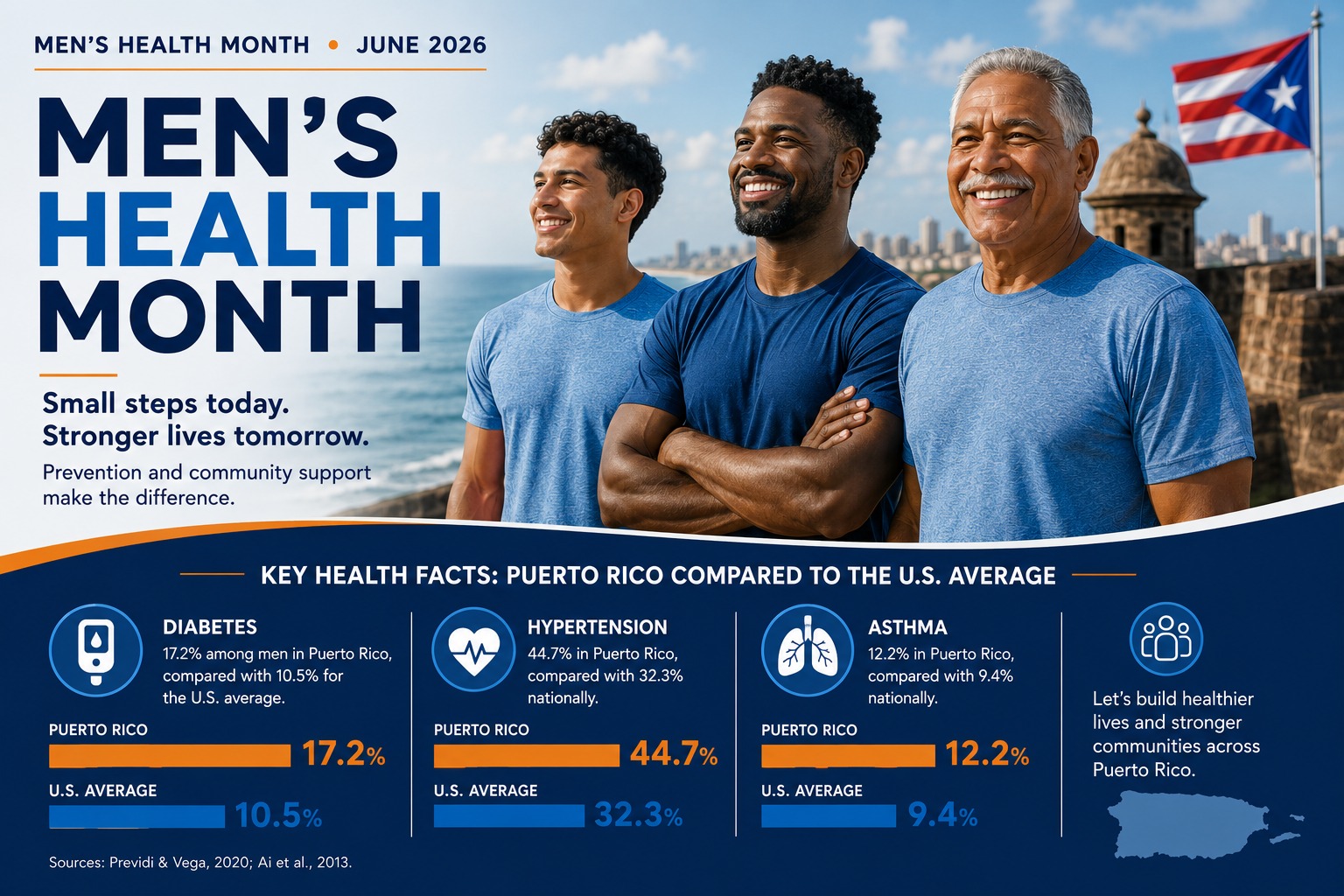
Men’s Health Month infographic highlighting key health facts for Puerto Rico.
The Alliance for Clinical and Translational Research (ALLIANCE), supported by the National Institute of General Medical Sciences (NIGMS) of the National Institutes of Health (Award P50GM133807), has been a key facilitator of men’s health research in Puerto Rico.
Men’s Health Month
Men’s Health Month is observed every June to encourage men of all ages to prioritize their health, engage in preventive care, and adopt healthy lifestyle habits. The official 2026 theme is “Partners in Care: For Better Lifespans Across the Lifespan,” highlighting the role of families, communities, and care partners in supporting men’s health. Men’s Health Week runs from June 15 to 21, 2026, culminating with Father’s Day on June 21.
Throughout the month, individuals, workplaces, and communities are encouraged to participate by wearing blue on Fridays (June 5, 12, 19, and 26), sharing educational resources, promoting preventive screenings, and supporting local events and awareness campaigns. Free digital toolkits and resources are available through the Men’s Health Month and Men’s Health Network websites (Men’s Health Network, 2026).
Why Men’s Health Month Matters
Men are statistically less likely than women to seek routine medical care, contributing to higher rates of preventable illness and premature death. In the United States, men die, on average, five years earlier than women and are more likely to delay or avoid seeking care when experiencing serious symptoms. This gap is not inevitable; it is shaped by behavioral patterns, cultural expectations surrounding masculinity, and persistent barriers to accessing care.
Men’s Health Month was established to help change this reality by promoting awareness, prevention, and early intervention. The observance focuses on five key priorities:
- Heart health: encouraging early detection and lifestyle changes to reduce cardiovascular risk, the leading cause of death among men in the U.S.
- Cancer prevention: promoting prostate, colorectal, and other recommended screenings to detect disease at its earliest and most treatable stages.
- Mental health: addressing stress, anxiety, depression, and suicide risk while reducing the stigma associated with seeking support.
- Chronic disease awareness: improving prevention and management of conditions such as diabetes, hypertension, and obesity through regular care and healthy lifestyle practices.
- Family and community engagement: encouraging men to prioritize their own well-being while remaining healthy and present for the families and communities who depend on them.
For men in Puerto Rico, these priorities are especially urgent. Decades of economic challenges, natural disasters, and ongoing limitations in health care access have contributed to disproportionately high rates of chronic disease, cancer, and mental health concerns. These conditions continue to affect Puerto Rican men at levels that often exceed national averages, making targeted prevention, early detection, and community-based health initiatives critical. Understanding the local evidence is essential to addressing these gaps and improving outcomes for men around the archipelago.
Health Gaps Affecting Men in Puerto Rico
Men in Puerto Rico face substantial gaps in health outcomes compared to women and other population groups, including higher rates of chronic disease, certain cancers, mental health conditions, substance use disorders, and premature mortality. These gaps are shaped by a complex interplay of socioeconomic disadvantage, limited access to health care, behavioral risk factors, and persistent barriers to care (Previdi & Vega, 2020; Valdez et al., 2022; Barbieri et al., 2023). Prostate cancer remains one of the most significant threats to men’s health in Puerto Rico, where incidence and mortality rates rank among the highest in the United States (Miller et al., 2018; Soto-Salgado et al., 2012). Social determinants such as poverty, education level, employment status, and experiences of stigma further worsen these outcomes (Valdez et al., 2022; Guerrios-Rivera et al., 2024).
Approximately 44% of Puerto Rico’s population lives below the federal poverty line, more than three times the U.S. national average (Previdi & Vega, 2020). This economic vulnerability increases exposure to chronic stress and restricts access to the resources needed for effective care. As a result, studies have documented elevated rates of diabetes, hypertension, prostate cancer, and premature mortality among men on the island.
Chronic Disease and Mortality: Evidence from Puerto Rico
Puerto Rican men have a higher prevalence of chronic conditions compared to both women on the island and other Hispanic subgroups in the United States (Previdi & Vega, 2020; Ai et al., 2013; Erving, 2018). Life expectancy among men in Puerto Rico trails that of women by nearly eight years, with premature mortality driven in part by external causes such as homicide and unintentional injuries (Zulueta, 2013). The comparative figures are particularly striking:
- Diabetes: 17.2% among men in Puerto Rico, compared with 10.5% for the U.S. average (Previdi & Vega, 2020).
- Hypertension: 44.7% in Puerto Rico, compared with 32.3% nationally (Ai et al., 2013).
- Asthma: 12.2% in Puerto Rico, compared with 9.4% nationally (Ai et al., 2013).
- Obesity and cardiovascular disease: rates higher than those observed in other Hispanic groups in the U.S. (Previdi & Vega, 2020).
- Medicaid reliance: approximately 49% of the population, compared with roughly 20% nationally (Valdez et al., 2022).
These patterns are not explained solely by individual behaviors. They reflect widespread barriers rooted in poverty, underfunded health care infrastructure, the legacy of past policy decisions, and environmental exposures (Valdez et al., 2022; Von Essen et al., 2021).
Cancer: A Disproportionate Burden
Prostate cancer is the leading cause of cancer death among men in Puerto Rico. Incidence rates are up to 60% higher than among other U.S. Hispanics and 44% higher than among non-Hispanic white men (Miller et al., 2018; Soto-Salgado et al., 2012). These findings are consistent across multiple population-based registries and represent one of the most significant oncological gaps in the nation.
In addition to prostate cancer, men in Puerto Rico face elevated rates of:
- Penile cancer: incidence three times higher than among non-Hispanic white men (Colon-Lopez et al., 2012).
- Anal cancer: elevated incidence among younger men (Colon-Lopez et al., 2013).
- Colorectal cancer: actively monitored by Alliance researchers, with ongoing feasibility and intervention studies (Soto-Salgado et al., 2009).
Socioeconomic status strongly influences both incidence and mortality for these cancers (Colon-Lopez et al., 2012), underscoring the need for interventions that address the underlying social conditions driving these outcomes.
Mental Health and Substance Use
Men in Puerto Rico report elevated rates of depression, substance use disorders, and co-occurring diagnoses (mental illness combined with substance use). Puerto Rico has the highest rates of substance use disorders among all Hispanic subgroups in the United States (Ai et al., 2013; Erving, 2018). Discrimination and internalized stigma contribute significantly to psychological distress (Mullany et al., 2022; Barbieri et al., 2023).
Clinicians and individuals should be attentive to the following indicators:
- Depression: nearly 1 in 10 men meet clinical criteria annually (Valdez et al., 2022). Presentations may differ from those described in non-Hispanic samples.
- Anxiety and chronic stress: worsened by economic instability, natural disasters, and compounding barriers to care (Mullany et al., 2022).
- Substance use: use of alcohol, nicotine, and cannabis as coping strategies may escalate into substance use disorders (Ai et al., 2013).
- Co-occurring diagnoses: high prevalence of physical-psychiatric comorbidity, requiring integrated models of care (Erving, 2018).
Social and Economic Factors Shaping Men’s Health
Health gaps among men in Puerto Rico are shaped by a set of social, economic, and cultural factors that interact in complex ways (Valdez et al., 2022; Barbieri et al., 2023):
- Poverty and unemployment: approximately 44% live below the poverty line; precarious employment limits access to health insurance and preventive care (Previdi & Vega, 2020).
- Skin tone-based differences in outcomes: men with darker skin tones face worse health outcomes, even after controlling for other variables (Caraballo-Cueto & Godreau, 2021).
- Men who have sex with men (MSM): face HIV risk more than 10 times higher than the general population; targeted outreach and care remain limited (Colon-Lopez et al., 2013).
- Migration-related stress: Puerto Rican communities in northeastern U.S. cities face additional barriers tied to acculturation and discrimination (Barbieri et al., 2023; Garcia, 2024).
- Cultural norms around masculinity: traditional expectations about male roles discourage men from seeking medical attention or emotional support (Valdez et al., 2022).
Warning Signs: When to Seek Care
Early identification and timely intervention are essential to reducing premature mortality among men in Puerto Rico. The following are indicators that warrant clinical evaluation:
- Persistent physical symptoms: chronic headache, fatigue, elevated blood pressure without apparent cause, difficulty urinating, or blood in the stool.
- Changes in mood: persistent sadness, irritability, difficulty concentrating, social withdrawal, or feelings of hopelessness.
- Behavioral changes: increased alcohol or substance use, reduced physical activity, or changes in sleep or appetite.
- Colorectal cancer warning signs: blood in the stool, changes in bowel habits, unexplained weight loss, or a family history of colorectal cancer or Lynch syndrome.
Evidence-Based Strategies for Improving Men’s Health
Evidence from Puerto Rico and other populations demonstrates that multilevel, culturally tailored interventions can reduce these health gaps (Previdi & Vega, 2020; Derieux-Cruz et al., 2025). The following strategies are associated with better health outcomes:
- Preventive screenings: colonoscopy starting at age 45 (or earlier with a family history), PSA testing for prostate cancer, blood pressure monitoring, and fasting glucose (Miller et al., 2018).
- Regular physical activity: at least 150 minutes of moderate-intensity exercise per week. Physical activity is a well-established buffer against chronic stress.
- Healthy diet: a diet rich in fruits, vegetables, whole grains, and lean proteins is associated with greater resilience and improved overall health.
- Adequate sleep: prioritizing 7 to 8 hours per night; sleep deprivation is associated with higher stress and poorer cardiovascular outcomes.
- Mental health care: access to evidence-based therapies, trauma-informed approaches, and community resources is essential for men experiencing persistent stress or depression (Valdez et al., 2022).
- Social and community support: strengthening social networks and community ties improves resilience and reduces the impact of chronic risk factors (Barbieri et al., 2023).
It is important to note that promoting healthy habits should not shift responsibility for addressing poverty, inadequate housing, or disaster exposure onto individuals alone. Public health programs and policy-level reforms are essential complements to individual-level strategies (Previdi & Vega, 2020).
Recommendations for Action
Addressing health gaps among men in Puerto Rico requires coordinated action across individual, clinical, community, research, and policy levels:
- Individuals: prioritize annual preventive care visits, adhere to recommended cancer screening guidelines, and seek mental health support when stress, anxiety, or depression become persistent or interfere with daily functioning.
- Health care providers: incorporate routine screening for social and economic determinants of health primary care, recognize culturally specific expressions of psychological distress, and connect patients with appropriate community-based mental health and support services (Colon-Lopez et al., 2013).
- Public health programs: expand access to community-based cancer prevention, chronic disease management, and mental health initiatives, particularly in underserved communities and areas with high poverty rates (Derieux-Cruz et al., 2025).
- Researchers and academic institutions: sustain and expand longitudinal studies that generate locally relevant evidence on men’s health in Puerto Rico, while advocating for funding priorities that reflect the island’s unique demographic, social, and health challenges (Previdi & Vega, 2020).
- Policymakers: address the structural of poor health outcomes, including poverty, housing instability, educational inequities, workforce shortages, and gaps in the health care infrastructure that limit access to preventive and specialty care.
Additional Resources
The following organizations provide information, health services, and support related to men’s health and cancer prevention in Puerto Rico:
Table 2. Resources for men’s health and cancer prevention in Puerto Rico.
| Organization | Description | Website |
|---|---|---|
| Men’s Health Month | Resources, digital toolkits, and educational materials for Men’s Health Month | https://www.menshealthmonth.org |
| Men’s Health Network | National network dedicated to improving the health and well-being of men | https://www.menshealthnetwork.org |
| Centers for Disease Control and Prevention (CDC) | Guidelines for colorectal and prostate cancer early detection | https://www.cdc.gov/cancer/ |
| Administration of Mental Health and Anti-Addiction Services (ASSMCA) | Mental health services and crisis support in Puerto Rico | https://www.assmca.pr.gov |
| UPR Comprehensive Cancer Center | Oncology research and care center at the University of Puerto Rico | https://www.cccupr.org/ |
| Alliance for Clinical and Translational Research | Clinical and translational research supporting communities in Puerto Rico | https://alliance.rcm.upr.edu |
Contributions of the ALLIANCE to Men’s Health Research
The Alliance for Clinical and Translational Research (ALLIANCE), supported by the National Institute of General Medical Sciences (NIGMS) of the National Institutes of Health (Award 5P50GM133807), has been a key facilitator of men’s health and cancer research in Puerto Rico.
Table 3. Active research studies related to men’s health with principal investigators and institutional affiliations
| Study Title | Principal Investigator | Institution |
|---|---|---|
| Association between Differential Gene Expression and Fatigue Symptoms of Puerto Rican Patients during Cancer Treatments | Gonzalez-Mercado, Velda J. | UPR Comprehensive Cancer Center |
| Epigenetic Profiling of De Novo Metastatic Prostate Cancer in Puerto Rican Hispanic/Latino Men | Ortiz-Sanchez, Carmen | Ponce Health Sciences University |
References
Ai, A., Noel, L., Appel, H., Huang, B., & Hefley, W. (2013). Overall health and health care utilization among Latino American men in the United States. American Journal of Men’s Health, 7, 17-6. https://doi.org/10.1177/1557988312452752
Barbieri, M., Mercado, E., Gubrium, A., & Valdez, L. (2023). Social connectedness and surviving at the margins: Findings from interviews with low-income Latino men in the U.S. Northeast. Cultural Diversity & Ethnic Minority Psychology, 31, 97-109. https://doi.org/10.1037/cdp0000604
Caraballo-Cueto, J., & Godreau, I. P. (2021). Colorism and health disparities in home countries: The case of Puerto Rico. Journal of Immigrant and Minority Health, 23, 926-935. https://doi.org/10.1007/s10903-021-01222-7
Colon-Lopez, V., Ortiz, A. P., Soto-Salgado, M., Torres-Cintron, M., Pettaway, C., Puras-Baez, A., Martinez-Ferrer, M., & Suarez, E. (2012). Penile cancer disparities in Puerto Rican men as compared to the United States population. International Brazilian Journal of Urology, 38, 728-738. https://doi.org/10.1590/1677-553820133806728
Colon-Lopez, V., Ortiz, A. P., Soto-Salgado, M., Torres-Cintron, M., Mercado-Acosta, J. J., & Suarez, E. (2013). Anal cancer incidence and mortality in Puerto Rico. Puerto Rico Health Sciences Journal, 32(2), 76-81.
Colon-Lopez, V., Soto-Salgado, M., Rodriguez-Diaz, C. E., Suarez, E., & Perez, C. (2013). Addressing health disparities among men: Demographic, behavioral, and clinical characteristics of men who have sex with men in Puerto Rico. Sexuality Research and Social Policy, 10, 193-199. https://doi.org/10.1007/s13178-013-0130-9
Derieux-Cruz, J., Rodriguez-Padilla, M., Perez, Y., Arroyo-Andujar, L., Ruiz-Deya, G., Matta, J., Marzan-Rodriguez, M., & Jimenez-Chavez, J. (2025). Design and implementation of a community-based educational program to enhance prostate cancer screening in southeastern Puerto Rico. Healthcare, 13. https://doi.org/10.3390/healthcare13212749
Erving, C. L. (2018). Physical-psychiatric comorbidity: Patterns and explanations for ethnic group differences. Ethnicity & Health, 23, 583-610. https://doi.org/10.1080/13557858.2017.1290216
Garcia, M. (2024). Intersectional microaggressions and implications for health disparities and HIV among Latino/x sexual minority males in Puerto Rico. Journal of Racial and Ethnic Health Disparities, 12, 613-624. https://doi.org/10.1007/s40615-023-01900-2
Guerrios-Rivera, L., Janes, J. L., De Hoedt, A. D., Klaassen, Z., Terris, M., Cooperberg, M., Amling, C. L., Kane, C. J., Aronson, W., Fowke, J. H., & Freedland, S. J. (2024). Do Hispanic Puerto Rican men have worse outcomes after radical prostatectomy? Results from SEARCH. Cancer Medicine, 13. https://doi.org/10.1002/cam4.7012
Men’s Health Network. (2026). June 2026 Men’s Health Month. Retrieved from https://tamh.menshealthnetwork.org/june-2026-mens-health-month/
Miller, K., Sauer, A. G., Ortiz, A. P., Fedewa, S., Pinheiro, P., Tortolero-Luna, G., Martinez-Tyson, D., Jemal, A., & Siegel, R. (2018). Cancer statistics for Hispanics/Latinos, 2018. CA: A Cancer Journal for Clinicians, 68. https://doi.org/10.3322/caac.21494
Mullany, A. L., Barbieri, M., Smith, S., Gubrium, A., & Valdez, L. (2022). “Who is our real enemy?” Internalized racism in the Puerto Rican diaspora and the role of political education within community health intervention. Social Science & Medicine, 311, 115334. https://doi.org/10.1016/j.socscimed.2022.115334
Previdi, I. L., & Vega, C. V. M. (2020). Health disparities research framework adaptation to reflect Puerto Rico’s socio-cultural context. International Journal of Environmental Research and Public Health, 17. https://doi.org/10.3390/ijerph17228544
Soto-Salgado, M., Suarez, E., Calo, W., Cruz-Correa, M., Figueroa-Valles, N., & Ortiz, A. P. (2009). Incidence and mortality rates for colorectal cancer in Puerto Rico and among Hispanics, Non-Hispanic Whites, and Non-Hispanic Blacks in the United States, 1998-2002. Cancer, 115, 3016-3023. https://doi.org/10.1002/cncr.24340
Soto-Salgado, M., Suarez, E., Torres-Cintron, M., Pettaway, C., Colon, V., & Ortiz, A. P. (2012). Prostate cancer incidence and mortality among Puerto Ricans: An updated analysis comparing men in Puerto Rico with U.S. racial/ethnic groups. Puerto Rico Health Sciences Journal, 31(3), 107-13.
Valdez, L., Mullany, A. L., Barbieri, M., & Gubrium, A. (2022). Uncovering historical legacies to contextualize health inequities in Puerto Rican men: An expansion of the minority stress model. Frontiers in Sociology, 7. https://doi.org/10.3389/fsoc.2022.830184
Von Essen, B. S., Kortsmit, K., D’Angelo, D. V., Warner, L., Smith, R. A., Simon, C. D., Garfield, C., Virella, W. H., & Bernal, M. V. (2021). Opportunities to address men’s health during the perinatal period: Puerto Rico, 2017. Morbidity and Mortality Weekly Report, 69, 1638-1641. https://doi.org/10.15585/mmwr.mm695152a2
Zulueta, T. (2013). Gender disparities in mortality: Challenges for health equity in Puerto Rico (pp. 103-114). https://doi.org/10.14718/acp.2013.16.2.10