

By: Edna Acosta Pérez, PhD, MSc
Co-Leader, Community Engagement and Outreach Core
Representing Puerto Rico at ACCEL Delaware 2025
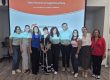
I had the honor of representing The Alliance at the 2025 Community Research Exchange (CRE) hosted by IDeA‑ Clinical and Translational Research (CTR) from Delaware (Delaware‑CTR ACCEL), where I presented a workshop titled “Measuring the Impact of Community Engagement in Research.” During this session, I shared frameworks and practical strategies for evaluating the outcomes and translational benefits of community-engaged research, using examples from our ongoing work in Puerto Rico through the Alliance IDeA-CTR Network). I discussed findings from the Alliance’s Community Health and Research Council—demonstrating how systematic measurement of trust, partnership capacity, and return on investment can strengthen accountability, sustainability, and the long-term impact of community partnerships. This experience reaffirmed my commitment to advancing health innovations, participatory, and community-driven research—ensuring that communities are not only participants, but true partners in the generation of knowledge that improves health and quality of life. Below is a short narrative version of the presentation.
Click here for more information
 why measurement matters
Community engagement in research is not an accessory to science; it is part of the scientific process itself. Measuring its impact allows us to move beyond anecdotal accounts toward evidence that shows how relationships, shared vision, and co-learning can transform health outcomes.¹⁻³ From a community psychology perspective, measurement is also an ethical act—it ensures that collaboration leads to mutual benefit, transparency, and accountability.⁴
In Puerto Rico, the Alliance for Clinical and Translational Research has taken this responsibility seriously. Through its Community Engagement and Outreach (CEO) Core, the Alliance has developed a longitudinal evaluation framework that documents how community partnerships evolve and how their work influences both, research practice and local well-being. The effort reflects an ongoing commitment to relational accountability—the principle that data must honor the communities that generate it.⁵⁻⁶
The Community Health and Research Council (CHCR)
Central to these efforts is the Community Health and Research Council (CHRC), a structure designed to bring community leaders, academic researchers, and institutional representatives into a shared-governance space. Such models of participatory governance have been identified as critical for sustaining community–academic partnerships and translating engagement into measurable outcomes.⁷⁻⁹
Established in 2020, the Community Council now includes 21 members from community organizations, governmental agencies, community representatives, citizens, and academic programs. Members meet bi-monthly or quarterly each year to review research activities, identify health priorities, and co-design engagement strategies that reflect community needs.
Between 2020 and 2024, CEO team following the CHRC advise and support facilitated eight regional forums, gathering over 200 participants from 55 municipalities. Together they identified 19 health concerns, including mental health, chronic disease, water security, homelessness, and the psychosocial effects of repeated natural disasters. Seventy percent of those priorities have already been addressed through research collaborations or community-driven initiatives supported by the Alliance and its partner. Each step of that process—dialogue, consensus, and response—was documented as evidence of collaborative impact, consistent with community-based participatory research (CBPR) evaluation frameworks.¹⁰, ¹¹

Toward a culture of reflective measurement
The Alliance approach to measuring community engagement demonstrates that evaluation can be both rigorous and relational. The CHRC and its partners have shown that when communities participate not only in research but in defining what success means, engagement evolves from outreach to co-ownership. This process, rooted in shared governance and mutual accountability, continues to influence how translational research is practiced across the island. More importantly, it affirms that the true measure of community engagement lies not only in numbers, but in the durability of trust and the visibility of communities in the scientific record.
References
- CTSA Community Engagement Key Function Committee Task Force. Principles of Community Engagement. 2nd ed. Washington, DC: US Dept of Health and Human Services; 2011.
- Israel BA, Schulz AJ, Parker EA, Becker AB. Community-Based Participatory Research: Policy Recommendations for Promoting a Partnership Approach in Health Research. Educ Health (Abingdon). 2001;14(2):182-197.
- Wallerstein N, Duran B, Oetzel J, Minkler M, eds. Community-Based Participatory Research for Health: Advancing Social and Health Equity. 3rd ed. San Francisco, CA: Jossey-Bass; 2017.
- DeAngelis T. Building successful research collaborations. Monitor on Psychology. September 2023. American Psychological Association. Accessed October 23, 2025. https://www.apa.org/monitor/2023/09/building-successful-research-collaborations
- Wilson S, et al. Research Is Ceremony: Indigenous Research Methods. Halifax, NS: Fernwood Publishing; 2008.
- Minkler M, Wallerstein N. Improving health through community organization and community building. Health Educ Behav. 2005;32(2):189-210.
- Khodyakov D, Stockdale S, Jones F, et al. On measuring community participation in research. Health Serv Res. 2013;48(2 Pt 1):734-754.
- Cargo M, Mercer SL. The value and challenges of participatory research: strengthening its practice. Annu Rev Public Health. 2008;29:325-350.
- MacQueen KM, Buehler JW. Ethics and engagement in public health research. Science. 2004;304(5678):214-215.
- Oetzel JG, Zhou C, Duran B, et al. Establishing CBPR partnerships: implications for theory and practice. BMC Public Health. 2015;15:225.
- Wallerstein N, Oetzel JG, Duran B, et al. Impact of CBPR on health outcomes: a review. Int J Equity Health. 2022;21:65.