

NATIONAL ALZHEIMER’S DISEASE AWARENESS MONTH
November 2026 — Standing together for people living with Alzheimer’s and those who care for them in Puerto Rico
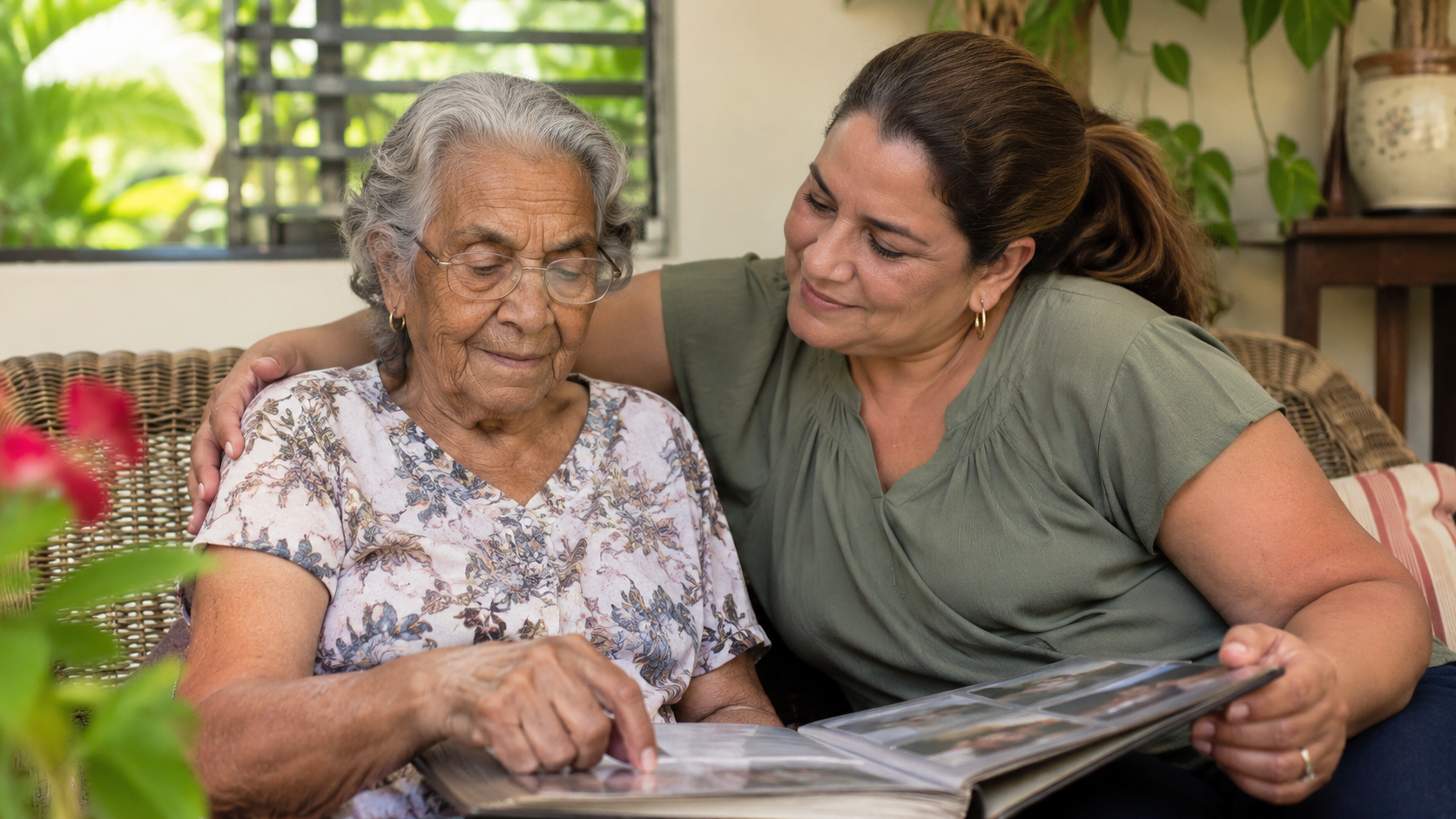
As part of National Alzheimer’s Disease Awareness Month, the Alliance for Clinical and Translational Research (ALLIANCE), supported by the National Institute of General Medical Sciences (NIGMS) of the National Institutes of Health (Award 2P50GM133807), shares this bulletin to raise awareness about Alzheimer’s disease and other forms of dementia in Puerto Rico and to inform our community about the resources and support available to people living with these conditions and their caregivers.
November: National Alzheimer’s Disease Awareness Month
In the United States, November is recognized as National Alzheimer’s Disease Awareness Month. This observance dates back to 1983, when President Ronald Reagan first proclaimed it. In 1994, Reagan publicly disclosed his own Alzheimer’s diagnosis in a handwritten letter to the American people. The observance seeks to increase awareness and understanding of the disease, reduce stigma, encourage early detection, and support ongoing research. Purple is the symbolic color of Alzheimer’s awareness (Awareness Days, 2026).
In Puerto Rico, Law No. 52 of 2021 designated September as Alzheimer’s Disease Awareness Month and September 21 as Alzheimer’s Disease Awareness Day, aligning with World Alzheimer’s Month (Law No. 52-2021). By joining the national November observance, this bulletin aims to sustain awareness throughout the year while recognizing the essential role of family members and other caregivers who support people living with Alzheimer’s disease and related dementias.
In 2026, an estimated 7.4 million Americans aged 65 and older are living with Alzheimer’s dementia. Nearly two-thirds are women, and older Hispanic Americans are approximately 1.5 times as likely as older White Americans to have Alzheimer’s disease or other dementias (Alzheimer’s Association, 2026). These figures underscore the importance of culturally responsive education, early detection, and accessible support services for affected individuals and their caregivers, including those in Puerto Rico.
November is also National Family Caregivers Month
The Alzheimer’s Association dedicates November to recognizing family caregivers with a powerful message: “Caregivers, we see you,” emphasizing that no one should have to navigate the challenges of caregiving alone. In the United States, nearly 13 million people provide unpaid care for individuals living with Alzheimer’s disease or other dementias, contributing more than 19 billion hours of care annually. The demands of caregiving can take a significant toll on well-being, with 59% of caregivers reporting high levels of emotional stress and 38% experiencing physical stress (Alzheimer’s Association, n.d.).
In Puerto Rico, these challenges are compounded by limited access to support services, including publicly funded adult day care and respite care, as well as the migration of younger family members, which can reduce the availability of informal caregiving support (Mendoza-Graf et al., 2025; Torres-Cintrón et al., 2026). National Alzheimer’s Disease Awareness Month provides an opportunity not only to recognize the dedication and contributions of caregivers, many of whom are women, adult children, and spouses, but also to highlight the importance of expanding resources, strengthening support networks, and promoting caregiver well-being.
What is Alzheimer’s disease?
Alzheimer’s disease is a progressive brain disorder that damages neurons and is the leading cause of dementia. Brain changes may begin years before symptoms such as memory loss and difficulties with language and judgment appear (Alzheimer’s Association, 2026).
In Puerto Rico, Law No. 237 of 1999 established the Registry of Alzheimer’s Disease, Huntington’s Disease, and Other Dementias. A digital platform launched in 2022 expanded reporting to 13 types of dementia, strengthening public health surveillance (Olavarría-Mercado et al., 2026).
Why it matters in Puerto Rico
Puerto Rico has one of the oldest populations worldwide, ranking fourth in the proportion of residents aged 60 and older (31.9%) (OPPEA, 2025). The proportion aged 65 and older has nearly doubled over the past decade, from 11% to 21%. An estimated one in eight older adults lives with dementia, nearly half of cases remain undiagnosed, and the number affected could double by 2050 (Torres-Cintrón et al., 2026).
According to the Puerto Rico Department of Health’s Dementia Registry:
- Reported cases: From January 2008 through June 2026, 77,628 dementia cases were reported, including 65,776 with an Alzheimer’s diagnosis.
- Demographics: The median age was 83 years; 64.5% were aged 80 or older, and 64.8% were women.
- Coexisting conditions: Nearly half (47.3%) reported additional health conditions, primarily hypertension (32.0%), diabetes (18.3%), and cardiovascular disease (12.2%).
- Mortality: Alzheimer’s is the fourth leading cause of death in Puerto Rico, accounting for 2,996 deaths. Among adults aged 60 and older, it ranked third in 2023, with 3,036 deaths (OPPEA, 2025; Olavarría-Mercado et al., 2026).
- 2026 trends: During the first half of 2026, 5,840 unique cases were reported. Rates were higher among women than men, with the highest age-adjusted regional rates in Aguadilla-Mayagüez and Caguas (Registro de Enfermedad de Alzheimer, Enfermedad de Huntington y otras Demencias, 2026).
- Projection: Cumulative reported Alzheimer’s cases could reach approximately 117,000 by December 2030 (Olavarría-Mercado et al., 2026).
These findings highlight the growing public health impact of dementia in Puerto Rico and the need for early detection, accessible care, and stronger support for affected families.
What research in Puerto Rico tells us
Recent Research on Alzheimer’s Disease in Puerto Rico: Four Key Findings
Recent studies highlight four major challenges and discoveries related to Alzheimer’s disease in Puerto Rico: access to care, healthcare workforce shortages, funding disparities, and genetic risk.
1. Patients and caregivers: Insurance does not guarantee access to care (Mendoza-Graf et al., 2025; Torres-Cintrón et al., 2026)
Interviews with 51 patients and caregivers across 19 municipalities revealed:
- Access barriers: Despite 94% having Medicare Advantage, families reported long waits, specialist shortages, and poor care coordination.
- Long-term care: Medicaid does not cover long-term care in Puerto Rico. Adult day centers cost $900–$1,200 monthly, often with lengthy waiting lists.
- Caregiver burden: Most caregivers (82%) were women who faced emotional and financial strain, limited respite, and reduced family support due to emigration.
2. Primary care: A system sustained by individual effort (Alvarado et al., 2026)
Interviews with 25 physicians and clinic directors across seven health regions found:
- Specialist shortages: Primary care physicians manage complex dementia cases, often providing unpaid home visits and coordinating community services.
- Workforce challenges: Nearly half of practicing physicians are aged 60 or older, raising concerns about burnout and upcoming retirements.
3. Medicare: Higher dementia prevalence, lower funding
- Traditional Medicare: Dementia prevalence is 33% higher in Puerto Rico than in the United States, yet Medicare payments per beneficiary are 146% higher in the United States (Carrión-Baralt, 2023).
- Medicare Advantage: Among Hispanic enrollees, dementia prevalence is 15% in Puerto Rico compared with 9% in the United States (Bell et al., 2025).
4. Genetics: Emerging evidence of population-specific risk (Akgun et al., 2024)
- Genetic findings: A study of 648 Puerto Ricans, including 345 with Alzheimer’s, identified a potential risk region on chromosome 12 and confirmed 11 previously known genetic risk regions, including APOE.
- Significance: These preliminary findings highlight the importance of including Puerto Rican populations in genetic research and require further validation.
Key takeaway: Alzheimer’s disease in Puerto Rico is both a clinical and a public health equity challenge. Higher dementia prevalence, limited healthcare funding, workforce shortages, and substantial caregiver responsibilities underscore the urgent need for more accessible services, stronger support systems, and continued research.
Priorities for Strengthening Alzheimer’s Care in Puerto Rico
Research findings and Puerto Rico’s public health plans highlight five priorities for improving care and supporting people living with dementia and their caregivers:
- Long-term care: Expand Medicaid coverage to include long-term services and supports and address Medicare Advantage payment disparities between Puerto Rico and the states.
- Care coordination: Reduce appointment delays, improve electronic health record sharing, strengthen care coordination, and connect patients with community resources.
- Healthcare workforce: Retain healthcare professionals, reduce burnout, expand transportation and home-based services, and simplify prior authorization.
- Caregiver support: Advance the Healthy Aging Ten-Year Plan (PDES) by expanding dementia services, maintaining a directory of long-term care resources, and establishing respite and support programs for informal caregivers.
- Multisector collaboration: Strengthen the Puerto Rico Coalition on Alzheimer’s and Other Dementias (CADPR), established under the federal BOLD initiative, to promote early detection, risk reduction, caregiver support, research, education, and prevention of avoidable hospitalizations.
Together, these priorities emphasize the need for a more accessible, coordinated, and equitable system of dementia care that supports both individuals living with Alzheimer’s disease and those who care for them.
Recognizing the Early Signs of Alzheimer’s Disease
The Center for the Coordination of Services for Persons Affected by Alzheimer’s Disease identifies 10 warning signs (Centro de Alzheimer, 2024):
- Memory loss that interferes with daily life.
- Difficulty planning, concentrating, or solving problems.
- Trouble completing familiar tasks at home or work.
- Confusion about time or place.
- Vision or spatial difficulties, such as judging distances or getting lost.
- Language difficulties, including trouble finding words.
- Misplacing objects and difficulty retracing steps.
- Poor judgment or changes in decision-making.
- Withdrawal from work, hobbies, or social activities.
- Changes in mood or personality, including anxiety, sadness, fear, or irritability.
Why early detection matters: Recognizing these signs and seeking medical evaluation can lead to earlier diagnosis, timely access to treatment and support services, and better planning for future medical, legal, and financial needs. It also helps caregivers access information, guidance, and resources (Centro de Alzheimer, 2024).
How you can take part this November
- Wear purple: Show your support for Alzheimer’s awareness and share reliable information using #AlzheimersAwareness and #ENDALZ (Awareness Days, 2026).
- Recognize memory changes: If you or a loved one experiences memory concerns, consult a healthcare professional or request a free virtual memory screening through the Alzheimer’s Foundation of America (AFA).
- Protect your brain health: Research identifies 14 potentially modifiable dementia risk factors that together may account for approximately 45% of cases. Managing blood pressure and diabetes, staying physically active, and maintaining social connections can help reduce risk (Livingston et al., 2024).
- Support a caregiver: Offer respite, help with errands, coordinate family support, or simply check in. Small gestures can make a meaningful difference (Alzheimer’s Association, n.d.).
- Get involved: Learn about the Puerto Rico Coalition on Alzheimer’s and Other Dementias (CADPR), share educational resources, and support community efforts to improve dementia care (CADPR, n.d.).
This November, every action counts. Together, we can raise awareness, support caregivers, and build a more informed and compassionate community for people living with Alzheimer’s disease in Puerto Rico.
Local and national resources
| Organization | Services | Contact |
|---|---|---|
| Center for the Coordination of Services for Persons Affected by Alzheimer’s Disease (PR Department of Health) | Information on resources, education, support groups, and community interventions for patients and caregivers | 787-765-2929, exts. 4133, 4413, 4540, 4147; serviciosalzheimer@salud.pr.gov |
| Registry of Alzheimer’s, Huntington’s, and Other Dementias (PR Department of Health) | Epidemiological surveillance and data on reported cases in Puerto Rico | 787-765-2929, ext. 4553; registroalzheimer@salud.pr.gov |
| Puerto Rico Coalition on Alzheimer’s and Other Dementias (CADPR) | Multisector group and strategic plan to strengthen the dementia response | 787-765-2929, exts. 4133, 4132, 4147; cadpr@salud.pr.gov |
| Healthy Aging Section (PR Department of Health) | Healthy Aging Ten-Year Plan (PDES) and programs for older adults | 787-765-2929, exts. 4105, 4538; envejecimiento.saludable@salud.pr.gov |
| Alzheimer’s Association of Puerto Rico | Education and support groups | 787-727-4151 / 787-268-6818 |
| Pro-Alzheimer Care Organization (OPAPA, for its acronym in Spanish) | Support and guidance for families | 787-696-1159 / 939-231-9618 |
| Office of the Ombudsman for the Elderly (OPPEA) | Rights advocacy and complaints of abuse or neglect | 787-721-6121 |
| Companion Program for Older Adults (PAMA, for its acronym in Spanish) | Volunteer support and respite for caregivers | 787-721-6121 |
| Alzheimer’s Foundation of America (AFA) | Helpline staffed by licensed social workers, 7 days a week; free virtual memory screenings | 1-866-232-8484; alzfdn.org |
| Alzheimer’s Association | Confidential 24/7 Helpline in more than 200 languages (including Spanish); emotional support, support groups, and caregiver resources | 1-800-272-3900; alz.org |
| National Institute on Aging (NIA) | Spanish-language information on Alzheimer’s and dementia | 1-800-222-2225; nia.nih.gov/espanol |
The Alzheimer’s Center Services Directory (2024) lists, by municipality, activity centers (CAMPEA), in-home aide services, transportation, adult care centers, and foster homes. Request it from the Center.
References
Akgun, B., Feliciano-Astacio, B., Hamilton-Nelson, K., Scott, K. M., Rivero, J., Adams, L., et al. (2024). Genome-wide association analysis and admixture mapping in a Puerto Rican cohort supports an Alzheimer disease risk locus on chromosome 12. Frontiers in Aging Neuroscience, 16, 1459796. https://doi.org/10.3389/fnagi.2024.1459796
Alvarado, G., Pérez-Dávila, S., Mendoza-Graf, A., Lara, M., Castro, G., Ríos, I., Torres-Cintrón, M., & Timbie, J. (2026). Organizational resilience in Puerto Rico’s primary care clinics: Absorbing, adapting, and transforming under stress. Frontiers in Health Services, 6, 1886937. https://doi.org/10.3389/frhs.2026.1886937
Alzheimer’s Association. (2026). 2026 Alzheimer’s disease facts and figures. Alzheimer’s & Dementia, 22. https://doi.org/10.1002/alz.71345
Alzheimer’s Association. (n.d.). November is National Family Caregivers Month. https://www.alz.org/events/nadam
Awareness Days. (2026). National Alzheimer’s Disease Awareness Month 2026. https://www.awarenessdays.com/awareness-days-calendar/national-alzheimers-disease-awareness-month/
Bell, T., Northcutt, C., Milani, S., Gider, N., & Crowe, M. (2025). Prevalence of ADRD among Medicare Advantage enrollees in Puerto Rico compared to US counterparts [Abstract]. Innovation in Aging, 9(Suppl. 2). https://doi.org/10.1093/geroni/igaf122.1501
Carrión-Baralt, J. (2023). Prevalence and payments per capita of ADRD in Puerto Rico and the US: Estimates from Medicare data [Abstract]. Innovation in Aging, 7(Suppl. 1), 855. https://doi.org/10.1093/geroni/igad104.2756
Centro para la Coordinación de Servicios a Personas Afectadas con la Enfermedad de Alzheimer. (2024). Directorio de servicios: Centro de Alzheimer [Services directory]. Puerto Rico Department of Health.
Coalición de Alzheimer y otras Demencias en Puerto Rico. (n.d.). Coalición de Alzheimer y otras Demencias en Puerto Rico (CADPR) [Fact sheet]. Puerto Rico Department of Health.
Ley del Mes y el Día de la Concienciación de la Enfermedad de Alzheimer [Alzheimer’s Disease Awareness Month and Day Act], Law No. 52 of October 22, 2021. https://bvirtualogp.pr.gov/ogp/Bvirtual/leyesreferencia/PDF/52-2021.pdf
Livingston, G., Huntley, J., Liu, K. Y., Costafreda, S. G., Selbæk, G., Alladi, S., et al. (2024). Dementia prevention, intervention, and care: 2024 report of the Lancet standing Commission. The Lancet, 404(10452), 572–628. https://doi.org/10.1016/S0140-6736(24)01296-0
Mendoza-Graf, A., Castro, G., Ramos Valencia, G., Torres-Cintrón, M., Jiménez Velázquez, I. Z., Ríos, I., Hernández Santiago, J., Weidmer, B., Lara, M., & Timbie, J. W. (2025). Factors impacting caregiver burden for familial caregivers in Puerto Rico: Perspectives from 51 caregivers of people living with Alzheimer’s disease [Abstract]. Alzheimer’s & Dementia, 21(Suppl. 4), e103595. https://doi.org/10.1002/alz70858_103595
Oficina del Procurador de las Personas de Edad Avanzada. (2025). Perfil sociodemográfico de la población de adultos mayores 2025 [Sociodemographic profile of the older adult population 2025]. Government of Puerto Rico.
Olavarría-Mercado, C. M., Felici-Giovanini, M. E., & Román-Afanador, M. (2026). Informe de casos reportados al Registro de la Enfermedad de Alzheimer, Huntington y Otras Demencias, enero 2008–junio 2026 [Infographic]. Centro para la Coordinación de Servicios a Personas Afectadas con la Enfermedad de Alzheimer, SASSI, Puerto Rico Department of Health.
Puerto Rico Department of Health. (n.d.). Plan Decenal de Envejecimiento Saludable para Puerto Rico [Healthy Aging Ten-Year Plan for Puerto Rico]. Secretaría Auxiliar de Servicios para la Salud Integral.
Registro de Enfermedad de Alzheimer, Enfermedad de Huntington y otras Demencias. (2026). Infografía epidemiológica: Informe preliminar enero–junio 2026 [Epidemiological infographic]. Puerto Rico Department of Health.
Torres-Cintrón, M., Mendoza-Graf, A., Castro, G., Ramos-Valencia, G., Lara, M., Jiménez-Velázquez, I. Z., Rios, I., Hernandez-Santiago, J., Weidmer, B., & Timbie, J. W. (2026). Barriers to health care access in a federally under-resourced system: Experiences of Alzheimer’s disease and related dementias patients and caregivers in Puerto Rico. Frontiers in Public Health, 14, 1923342. https://doi.org/10.3389/fpubh.2026.1923342