
American Heart Month – February 2026
Each February, American Heart Month provides an opportunity to reflect on the importance of cardiovascular health and to promote prevention across the life course. In Puerto Rico, this observance carries particular urgency, given the substantial burden of heart disease and its risk factors across the population.
Cardiovascular disease (CVD) remains a major global public health challenge and continues to be the leading cause of death worldwide. In 2021, approximately 612 million people were living with CVD, reflecting a significant increase since 1990. Key risk factors, including hypertension, obesity, high cholesterol, elevated glucose, tobacco use, unhealthy diet, physical inactivity, and environmental exposures, drive this growing burden and are largely preventable.
In the United States, CVD is also a leading cause of death, with a high prevalence of risk factors among Hispanic/Latino populations. According to the American Heart Association, more than half of Hispanic men and over one-third of Hispanic women aged 20 years and older have some form of CVD. Importantly, Puerto Rican adults experience some of the highest prevalences of obesity, smoking, and hypercholesterolemia among Hispanic subgroups, underscoring the relevance of these national data to the local context.
In Puerto Rico, CVD continues to represent a significant public health concern. Data from the Chronic Disease Action Plan 2026-2030 and the 2024 Behavioral Risk Factor Surveillance System indicate that approximately 1 in 13 adults has CVD. The prevalence of major risk factors is high, with hypertension affecting 44% of adults, diabetes nearly 18%, and overweight and obesity more than 72% of the population. The burden is disproportionately higher among older adults, individuals with low income, and those with limited educational attainment, highlighting persistent health inequities.
Although CVD is often viewed as a condition of older age, risk factors and suboptimal cardiovascular health frequently emerge earlier in life. Young adulthood represents a critical period for prevention, as behaviors and exposures during this stage can shape cardiovascular risk across the lifespan. Recent studies, including PR-OUTLOOK, provide important local evidence to better understand cardiovascular health among young adults in Puerto Rico.
What the Data Reveals: The PR-OUTLOOK Study
In 2010, the American Heart Association introduced the concept of ideal cardiovascular health to shift the focus from treating established disease to promoting overall cardiovascular health. The PR-OUTLOOK (Puerto Rico Young Adults’ Stress, Contextual, Behavioral & Cardiometabolic Risk) study, conducted between 2020 and 2024 among more than 3,000 young Puerto Rican adults aged 18 to 29 years, assessed cardiovascular health using the American Heart Association’s Life’s Essential 8 framework, which evaluates diet, physical activity, tobacco/nicotine exposure, sleep, body mass index, non–high-density lipoprotein cholesterol, blood glucose, and blood pressure and computes an overall score ranging from 0 to 100 as the average of eight component scores. A score of 80 or higher is considered ideal cardiovascular health. The study found that 4 out of 5 (80%) young adults in this cohort have suboptimal levels (score<80).
Notable differences by sex were observed, suggesting the need for tailored prevention strategies. Young men had poorer overall cardiovascular health than women, driven primarily by less favorable blood pressure and cholesterol profiles, while young women reported lower levels of physical activity. Across both groups, diet quality, physical activity, and body mass index emerged as key areas requiring attention.
Beyond behavioral and biological factors, PR-OUTLOOK found strong associations between psychosocial factors and cardiovascular health. Lower subjective social status, a measure of an individual’s perceived social standing, and elevated symptoms of anxiety and depression were strongly associated with suboptimal cardiovascular health. These findings highlight the need to address psychosocial and socioeconomic barriers among young adults in Puerto Rico, as psychological distress may hinder health behavior change and lower subjective social status may reflect limited health literacy and reduced access to nutritious foods and safe spaces for physical activity.
These findings underscore that cardiovascular health is shaped not only by individual choices but also by broader social and economic conditions. A substantial proportion of young adults in Puerto Rico live in poverty (41%), which influences access to nutritious food, healthcare, and stable living conditions. These challenges have been compounded by major stressors in recent years, including natural disasters and the COVID-19 pandemic, whose cumulative effects are reflected in the study’s results.
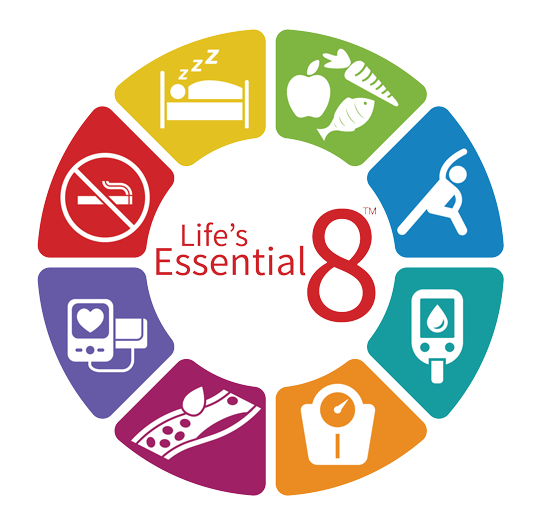
Practical Steps to Improve Cardiovascular Health
| Component | Recommendation |
|---|---|
| Physical Activity | Aim for at least 150 minutes of moderate or 75 minutes of vigorous physical activity per week. |
| Nutrition | Increase intake of fruits, vegetables, whole grains, and fish rich in omega-3 fatty acids, while reducing salt, added sugars, and saturated fats. |
| Sleep | Maintain a regular schedule of 7-8 hours of sleep per night. |
| Smoking | Avoid using traditional cigarettes, e-cigarettes, and vaping products. |
| Weight | Maintain a healthy weight, with a body mass index of less than 25 kg/m2. |
| Cholesterol | Control your cholesterol levels by maintaining total cholesterol below 150 mg/dL, LDL (bad cholesterol) below 100 mg/dL (or 70 mg/dL if you have a history of heart disease), HDL (good cholesterol) above 40 mg/dL for men and 50 mg/dL for women, and triglycerides below 150 mg/dL. |
| Blood pressure | Keep your blood pressure within acceptable ranges (levels <120/80 mm Hg are optimal). |
| Blood sugar | Keep your blood sugar within a healthy range (lower than 100 mg/dl). |
| Stress | Practice stress-management strategies such as deep breathing, meditation, or other relaxing activities, and seek professional support when needed. |
Next Steps
Improving cardiovascular health in Puerto Rico therefore requires an equity-focused approach that extends beyond individual behavior change. The PR-OUTLOOK study findings highlight the need for community-level policies and programs that reduce structural barriers to nutritious food, safe physical activity, and preventive health care. Early prevention, particularly among young adults, should emphasize health promotion and risk factor awareness with attention to mental health, sleep, and psychosocial stress. Continued use of locally generated, community-engaged research is essential to inform effective policies and interventions.
In this American Heart Month, individuals are encouraged to take concrete steps, such as understanding their blood pressure and cholesterol levels, reflecting on daily habits, and making gradual, sustainable changes. At the same time, meaningful progress in cardiovascular health depends on coordinated efforts across health care systems, communities, and public policy. Investing in cardiovascular health today is an investment in Puerto Rico’s future well-being.
Contributions of the ALIANZA in Cardiovascular Research
The Alliance for Clinical and Translational Research (ALLIANCE) has played an important role in advancing cardiovascular research in Puerto Rico by supporting community-based, clinical, and translational studies. These efforts have generated locally relevant evidence that informs public health strategies and clinical practice, complementing broader research initiatives and strengthening understanding of the factors influencing cardiovascular health across the population.
REFERENCES
- American Heart Association. (n.d.). Life’s Essential 8. https://www.heart.org/en/healthy-living/healthy-lifestyle/lifes-essential-8
- Puerto Rico Department of Health. (2025). Chronic Disease Action Plan in Puerto Rico 2026-2030.
- Puerto Rico Department of Health, Puerto Rico Behavioral Risk Factor Survey (BRFSS) [2024]. https://www.cdc.gov/brfss/
- Global Burden of Disease Cardiovascular Diseases and Risk Factors Collaborators. (2025). Global, regional, and national burden of cardiovascular diseases and risk factors in 204 countries and territories, 1990-2023. JACC, 86(22), 2167-2243. https://doi.org/10.1016/j.jacc.2025.08.015
- Pérez, C. M., López-Cepero, A., Almodóvar-Rivera, I., Kiefe, C. I., Tucker, K. L., Person, S. D., Mattei, J., Rodríguez-Orengo, J., & Rosal, M. C. (2024). Cardiovascular Health Among Young Men and Women in Puerto Rico as Assessed by the Life’s Essential 8 Metrics. Journal of the American Heart Association, 13(20), e035052. https://doi.org/10.1161/JAHA.124.035052
- Rosal, M. C., Almodóvar-Rivera, I., Person, S. D., López-Cepero, A., Kiefe, C. I., Tucker, K. L., Uribe-Jerez, M., Rodríguez-Orengo, J., & Pérez, C. M. (2024). Psychological and socio-economic correlates of cardiovascular health among young adults in Puerto Rico. American journal of preventive cardiology, 20, 100875. https://doi.org/10.1016/j.ajpc.2024.100875
- Pérez, C. M., Kiefe, C. I., Person, S. D., Tucker, K. L., Torres, P., Sandoval, E., Boneu, C., Ramírez, Z., Mattei, J., Rodríguez-Orengo, J., Almodóvar-Rivera, I., & Rosal, M. C. (2025). The Puerto Rico Young Adults’ Stress, Contextual, Behavioral, and Cardiometabolic Risk (PR-OUTLOOK) Study: design and methods. American journal of epidemiology, 194(3), 587–597. https://doi.org/10.1093/aje/kwae163